by Betsy DiJulio / Photo above: Clark Nexen’s Raleigh Office Upfit
Your company may not offer laundry service, a La Marzocco espresso machine, or a Lizzo concert on the grounds. But it turns out that doesn’t matter so much.

Intentional design is what helps businesses attract and retain top talent, while fostering greater health, happiness, creativity, and productivity. Deliberate design can also embody and project the values and brand image of your company in ways that resonate with employees, clients, and partners.
Evolving Trends and Intentional Design
Trends in office design are continually evolving, from desks facing supervisors bathed in fluorescent lighting, c. 1930s-1940s, to the cubicle farms of the 1960s-1990s and the densely packed spaces of the 1980s-1990s, to open-plan offices in the mid-2000s. While most of these shifts were well-intentioned, e.g. offering employees privacy via office cubicles, the outcomes were not always positive. Open-plan offices were meant to foster collaboration but were shown in studies to have the opposite effect. Desperate for less noise and distraction, employees could be found sitting shoulder to shoulder at long, uninterrupted tables wearing noise-cancelling headphones.
Beginning c. 2010 and continuing into the present landscape, employee-centered businesses responded to research indicating that green, sustainable office environments increased productivity by double digit percentages with WELL business standards first introduced in 2014. In 2020, the COVID-19 pandemic, which saw thousands of workers migrating home, served to underscore the unassailable connection between the physical workspace and employee well-being and performance. This bent the arc more emphatically toward hybrid, healthy, and flexible workspaces.
Intelligent design encompasses space planning and flow, ergonomics, lighting, acoustics, technology integration, sustainability and well-being, biophilia, and visual appeal. When purposeful decisions across this spectrum coalesce in the workplace, employees feel better and work more effectively with a greater sense of motivation and buy-in to the company’s mission. Here are three regional workplace design success stories:
TASTE
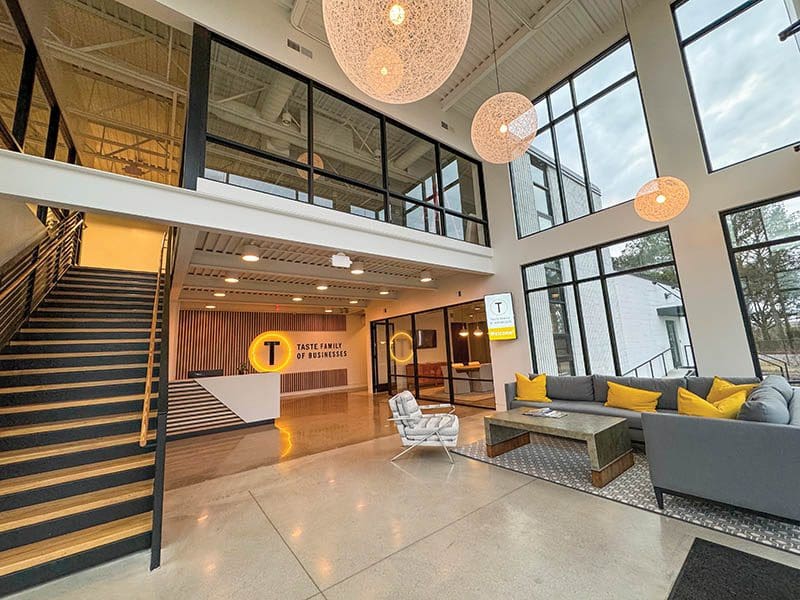
In 2016, when TASTE decided to move their corporate headquarters to an industrial park on Air Rail Avenue in Viriginia Beach, executive chairman, Jon Pruden, knew they would need to make the office space enticing. They said goodbye to the 1970s shag carpet vibe, replacing it with an airy, light-filled industrial chic space. Modern and minimalist, the corporate executive team offices are private, but their glass walls lend a feeling of cohesion.
Says retail director, Jenni Blythe, “The clean, organized environment reduces distraction and mental clutter, helping people feel focused and confident contributing ideas. The industrial warmth of concrete and warehouse elements adds authenticity and energy, which subtly encourages creativity and makes people feel like they’re building something together.”
Chief experience officer, Hannah Serrano, seconds that: “Everything from the lighting, wayfinding signage and color schemes to the architecture, furnishings, and building flow—it all works together to create an environment that inspires us as a team and helps us be collaborative and productive. It is very much a reflection of ‘the Good Life’ that our brand is known for.”
Clark Nexsen
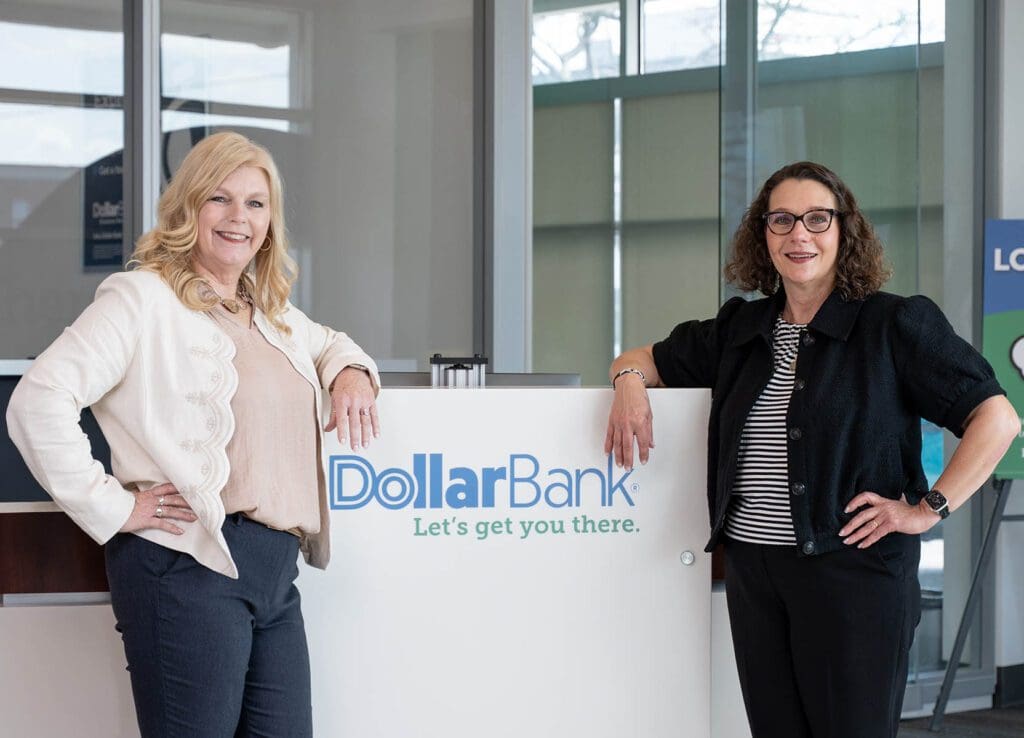
A year ago, the Virginia Beach headquarters of Clark Nexsen, a JMT company, underwent a refresh. To ensure ownership and empowerment, the design team surveyed employees for input. Topping the list of requests, according to Certified Interior Designer Brittany Adkins, were more collaborative and lounge spaces, better acoustics, and greater maximization of natural light. In a follow up furniture survey, interior designer Ashlyn Wooten notes that ergonomics was top of mind with high demand for desk height adjustability.
Says Clark Nexsen architectural designer Allison Rogers about the transformation, “The recent renovation added the Collaboration Cube, an open, dynamic, and multi-faceted space for hosting meetings, design pin-ups, casual conversations, and collaboration sessions across disciplines. Once a month, our floor hosts ‘Hygge Fridays” which transforms the Collaboration Cube into a cozy, casual setting where colleagues bring in their laptops, snacks are shared, and knowledge sharing and collaboration naturally take place.”

Assembly Norfolk
Assembly, a collaborative office environment located in a former department store in downtown Norfolk, also relied heavily on team input. Some of the feedback refuted assumptions, says co-founder and CEO Drew Ungvarsky, whose company GROW is also a tenant. Instead of modern cubicles, employees indicated a preference for open working areas, albeit with minimized disruption. In response, he says, “We got specific about desk width and height of dividers.”
Acknowledging that different people have different needs that change throughout the day, Assembly tried to create environments “where people could work, but be open to chance encounters and conversations.” The many varied workspaces mean that “People can choose the space that matches their moment.”
A major aspect of what Ungvarsky calls a “frictionless environment” relates to technology. “We talk a lot here about how, if we’re doing this right, everything just works and people do not even notice how well it is working.” They are also committed to ensuring that concerns like connectivity in a meeting room are “next to never a problem; we check every machine every day.”
Besides varied and flexible work areas and technology, “Light is one of the biggest things we focused on,” maximizing it in every way they could. A light well, which runs through the center of the building, is bright, open, and airy. Light-loving plants “bring liveliness to spaces that are filled with inanimate objects.”
Art too, says Ungvarsky. “People feel more inspired in beautifully designed spaces and art is a big part of that.” Assembly’s art program, curated by the Contemporary Art Network (CAN), is “unique and energizing” offering “different moments that resonate with different people.” Thom White is one of the founding principles of Works Program Architects (WPA), who served as the architects for Assembly and are also a tenant. He says the firm collects artwork that “puts our values on display.” The same is true for the continuous views through the building, as they embody an “open, visible, transparent process.”
White concurs with Ungvarsky’s emphasis on the importance of lighting, noting that it “helps us feel connected to the world through rhythms and knowing where we are in space.” Warmer light, he says, helps people feel calmer and more at ease whereas cooler light is more invigorating and livelier, and both can affect meetings and collaborations. The same is true for temperature. “Thermal comfort,” White asserts, leaves people feeling at ease.
A holistic approach to office design beyond simple choices of décor results in an environment that works for workers, enhancing company culture, productivity, and morale. “If anything,” says White, “your work environment falls away and lifts you up.”