by Eric J. Wallace
If you aren’t a medical industry insider, you’ve probably never heard the name Instant Systems. Products from the Norfolk-based design and manufacturing company aren’t prominently displayed on pharmacy shelves or in hospitals. They don’t take center stage in TV or social media ads—yet Instant Systems has played a vital role in the nation’s healthcare for nearly 30 years.

“Our work takes place upstream from the more visible patient visits and medical interventions,” said Instant Systems president and CEO, Tara Ramsey. The company operates on the supply chain side of things, “where precision sterility and reliability determine whether life-changing therapies ever reach a patient at all.”
Instant Systems designs and manufactures a fleet of sterile, single-use tools for an array of local and national medical companies like biopharmaceutical drug manufacturers, tissue processors, hospitals, gene or cell therapy developers, and vaccine makers. Products are crafted in ISO 13485 and Class 6 certified clean rooms—the global gold standard for quality management in advanced medical manufacturing—where conditions rival those found in major biotech hubs like San Francisco or Basel, Switzerland. The company’s catalog ranges from cell culture and cryopreservation bags, to lyophilization jars, tissue recovery systems, and tubing for fluid transfers. There’s also a line of related equipment, like simple or touchscreen-equipped heat and vacuum sealers for sensitive environments like operating rooms. Services like supply chain management, sterilization, and clean room setups round out the package.
“Although often unseen by the public, Instant Systems plays a direct role in enabling life-saving treatments to reach patients safely by creating the tools that make it possible,” said Ramsey. “Our products support upstream and downstream workflows [around biologic materials], from initial processing and sterile transfers, to final containment and distribution.”

The focus on niche manufacturing developed as the biotech industry boomed in the leadup to the completion of the Human Genome Project in 2003. Instant Systems was founded two years later as it split from its predecessor, Instant Technologies (a maker of quick-result diagnostic tests). Principles positioned the company to grow alongside rapidly emerging industries like cell therapy, tissue engineering, and regenerative medicine.
As breakthroughs came and technologies evolved, “we evolved with them, building the infrastructure that makes those therapies possible,” Ramsey said. What began as a concentrated effort to improve tissue banking and biomedical workflows quickly grew into a company trusted to respond to the industry’s most complex challenges. “Twenty years later, that mission remains the same,” Ramsay continued, “to enable best patient outcomes by equipping the companies that deliver life-changing biologics with the tools they need to drive innovation and ensure consistent product integrity.”
That infrastructure is increasingly critical. Many modern medical interventions—like Zolgensma, a one-time, injectable gene therapy treatment for children under the age of two that stops the progression of spinal muscular atrophy—are not mass-produced in the traditional sense. The biologics are derived from living organisms as opposed to chemical synthesis.
The treatments tend to be “personalized, highly sensitive, and unforgiving to contamination or error,” said Ramsey. That means handling failures lead to more than defective products: “It could become a lost treatment opportunity for a patient that enables a disease to progress beyond intervention or even results in death,” Ramsay said. “Instant Systems exists to prevent that outcome.”
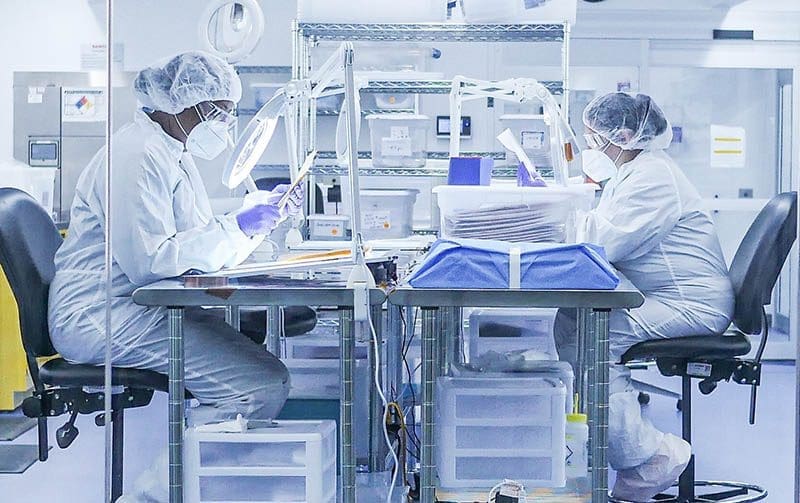
The expertise has attracted clients from businesses, research institutions, and organizations from around the U.S. and beyond. High-profile projects include a partnership with NASA to support ongoing BioNutrients research aboard the International Space Station that seeks to develop ways to biomanufacture mission-critical supplies like vitamins. Instant Systems’ success has brought expansions that have created shipping, manufacturing, sales, and logistics hubs at four locations spread across Hampton Roads. The addition of two more buildings and a subsequent wave of hiring is currently in the planning phase.
Ramsay doesn’t expect the progress to stop anytime soon. On one hand, the U.S. is in the process of reshoring critical manufacturing infrastructure from overseas—and with its well-developed assets, Instant Systems is in a unique position to capitalize. The list includes medical devices, which both the Biden and Trump administrations flagged as a national security concern. Market research firms, meanwhile, project the biotech industry to more than double in size from $1.55 trillion in 2024 to $3.88 trillion by 2030. What’s more, North America owns an outsized 41.37% of that market share.
“We see significant runway for growth,” Ramsay said. As demand for advanced therapies accelerates, “the need for reliable, high-quality infrastructure is only going to increase.”
Instant Systems is positioning itself not just to keep pace, but to help define the future of what that infrastructure will look like right here in Hampton Roads.