by Brandy Centolanza
For two weeks each year, women from all walks of life gather to bond while constructing new homes for a cause through the Women Build club, an offshoot of Habitat for Humanity of South Hampton Roads.

The program, which Habitat for Humanity first launched in 1991, provides volunteers with the opportunity to collaborate, learn new skills, and forge a lasting impact on their communities. The local chapter started its own Women Build program about five years ago. While the majority of members are female, anyone 18 and older can participate.
“It is about empowering other women and giving back to a cause that is critical right now,” said Megan Savali, executive director of Habitat for Humanity of South Hampton Roads, who oversees the initiative.
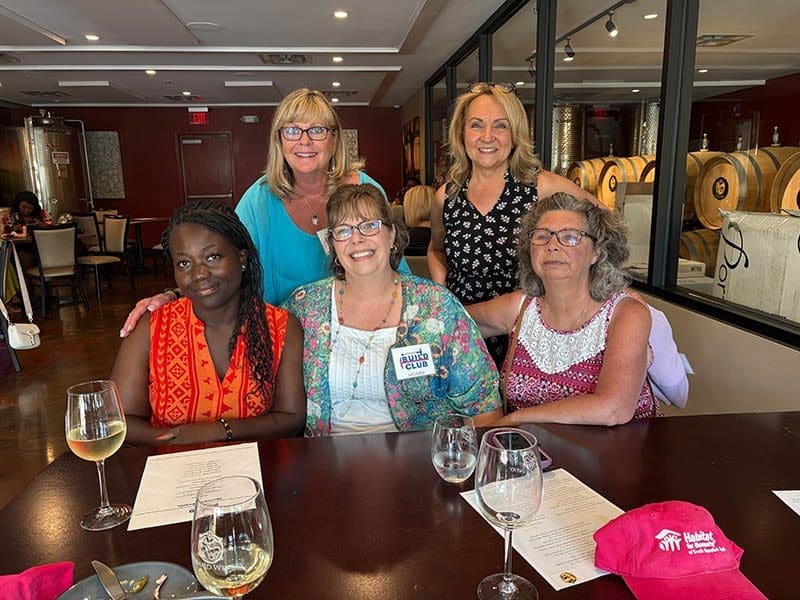
The local Women Build program consists of two parts: a social club aspect with networking events and educational workshops, as well as Women’s Build Weeks, a hands-on build at a construction site that takes place annually over a period of two weeks during warmer weather months. Last year, volunteers assisted with the construction of two homes built next to each other along Vincent Avenue in Norfolk, while this year’s build was held at the end of April for another home in Norfolk on Walker Avenue.
The need for affordable housing in the region is dire. Out of the more than 250 family homes Habitat for Humanity of South Hampton Roads has constructed, 90% have been for single mothers, one of the drivers that led to the establishment of Women Build.

“Women supporting and empowering other women in need was something I thought was important,” Savali said.
The club is comprised of more than 60 women aged 20 to 62 who hold a range of jobs. There are architects, bankers, teachers, and those who work in the food industry and local government who are active in Women Build, along with many businesses who sponsor and give to the cause in other ways.

Susan Bradshaw, a Red Hat volunteer and one of the original members of Women Build, first heard about Habitat for Humanity from a neighbor. From her first build, “I was hooked,” she said. “I’ve always liked building things.” As a Red Hat volunteer, she trains other women at the construction sites, including the most recent build.
“It’s a great program,” she said. “I monitor, mentor, teach and assist and then let the women do the work. Some ladies are more talented and hands-on and have done this before, while others have desk jobs and have never seen a nail gun before. But when they learn to use it and say they think they’ll go out and buy one, that is rewarding to me. It’s about looking beyond what they think their capabilities could be.”
Meeting the homeowners of the houses they help build is also inspiring.
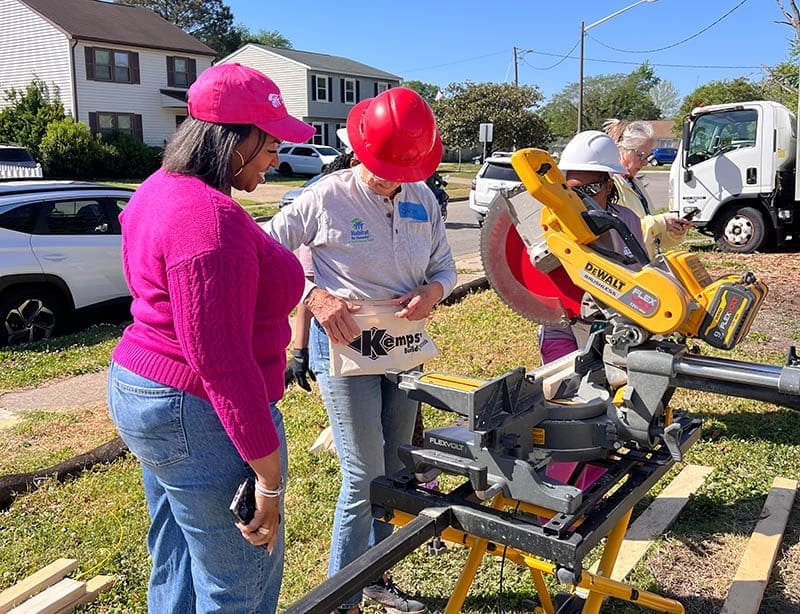
“I like building the homes, but I also enjoy when the family sees the end result and realizes their dream is coming true,” Bradshaw said. “I always tell people to bring a Kleenex because it is miraculous.”
The recipient of this year’s house is Leola Wiggins, a mother of three.
“We are just so grateful for Habitat for Humanity,” Wiggins shared. “The Habitat team has been supportive and compassionate, guiding us through each step with clarity and care. The process has not only helped us move closer to stable homeownership but has also restored our belief in community. This process has had a profound impact on our life. For me and my family, becoming homeowners symbolizes stability, comfort, and peace of mind. It means no longer having to worry about frequent moves or temporary living arrangements.”

Shelley Streetman, a member of the board of the local chapter of the National Association for Women in Construction and a member of Women Build, had the opportunity to meet Wiggins during her first build with the program. While on site, Streetman learned to use a nail gun and a chop saw and helped hang sheathing on the side of the house. Although she may have developed new skills, knowing she was providing a home for Wiggins and her family was more meaningful to her.
“It was a fantastic experience,” Streetman said. “We all have our ups and downs, so if we are in a position to pay it forward, we should. That’s what makes us special as humans, the ability to give back when we can.”