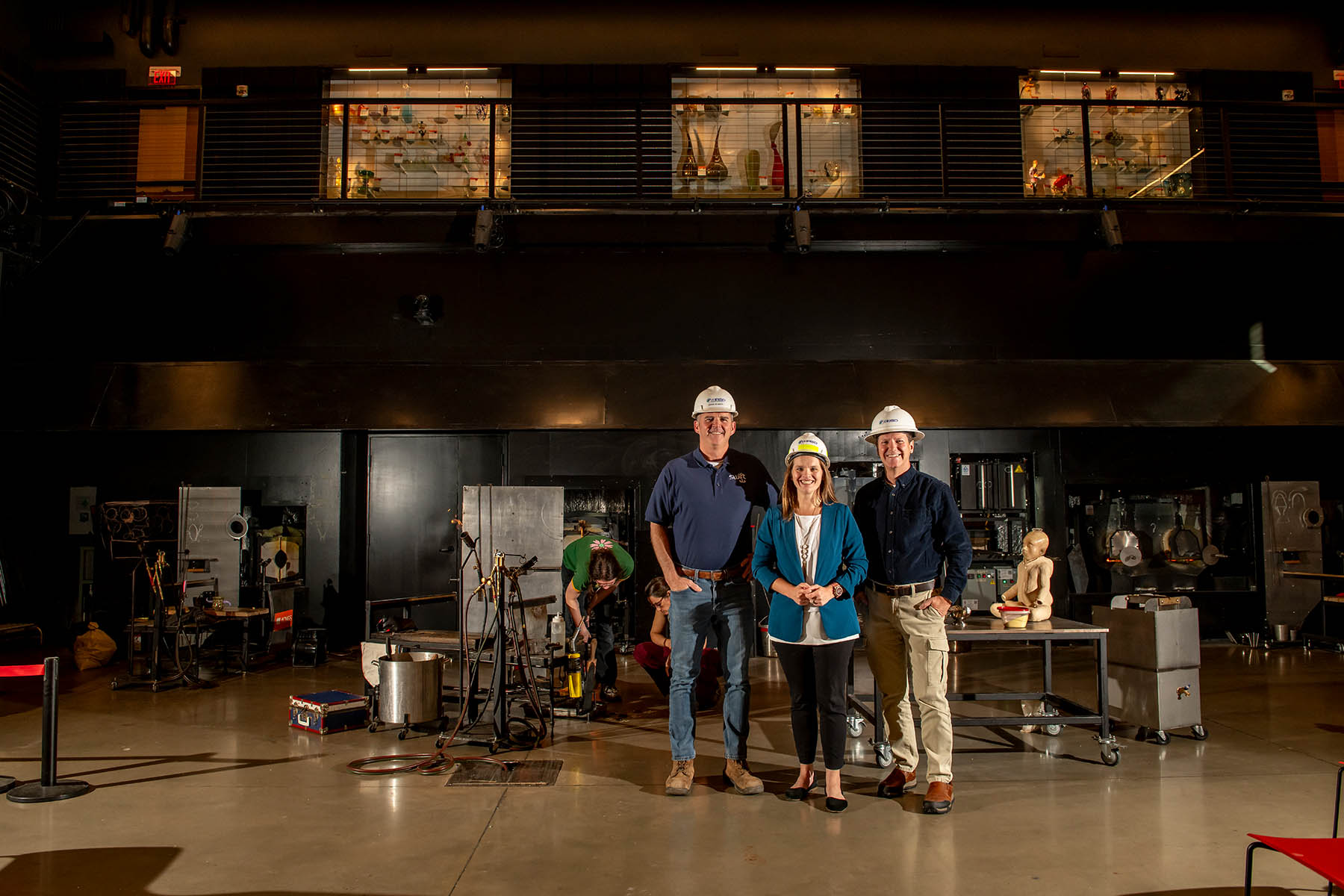

by Beth Hester / Photo above: Dr. Charles Bott, Chief Technology Officer at Hampton Roads Sanitation District (HRSD)
Lauren Zuravnsky, Director of Design & Construction - SWIFT at HRSD
Dan Holloway, Hydrogeologist, HRSD
Located in northern Suffolk, the unassuming HRSD SWIFT Research Center is home to a forward-thinking team of scientists, engineers, researchers, and project managers who are advancing some of the region’s most significant water-treatment initiatives. Led by Hampton Roads Sanitation District General Manager and CEO Jay Bernas, the team is delivering on some of the most advanced and impactful water treatment projects in the region.
The Center is so low-key that one journalist referred to it as “an understated outpost.” Yet the unpretentious building belies the fact that it houses HRSD’s keystone project, SWIFT. It’s an undertaking that Bernas refers to as “the world’s largest water project of it’s kind in the world.”

SWIFT stands for The Sustainable Water Initiative for Tomorrow, and it’s an innovative water treatment project designed to further protect the region’s environment, enhance the sustainability of the region’s long-term groundwater supply and help address environmental pressures like pollution in the Chesapeake Bay, sea level rise, ground subsidence, and saltwater intrusion.
If all of this sounds wildly ambitious, it’s because it is.
Though it has received global attention, SWIFT is arguably the biggest regional public works project that most Hampton Roads residents have never heard of, yet the project’s knock on benefits go well beyond pollution reduction and protecting public health. They include: support for economic development, R&D collaborations between industry, academia and water technology startups, and cost savings for consumers.
A product of Norfolk public schools, Bernas obtained a civil engineering degree from ODU, and an MBA from William & Mary. Early in his career he did consulting work, but got his real first taste of public service working with the city of Virginia Beach. That experience of deep public service resonated with him, and once he arrived at HRSD, that passion led to roles that were increasingly focused on initiatives and programs that would optimize environmental compliance, update water treatment facilities and infrastructure, and bring a waterpreneurship mindset to the organization.
“I love having a background in both engineering and finance and having the two intersect in my work,” Bernas explains. “HRSD is a wastewater utility, but I think it’s great to be able to run it like a business. We want to innovate, and then use those innovations to protect the environment, and to help keep rates affordable. We’re always striving to be good stewards of the public’s trust and of their money. That thinking drives our every day on the research side and on the finance side.”
Bernas continues, “Innovation has always been in HRSD’s DNA, but we’re trying to take things to the next level—to create the Silicon Valley of water innovation right here in Hampton Roads, and SWIFT is a huge part of that. Among other goals, we want to drive community impact through economic development.”
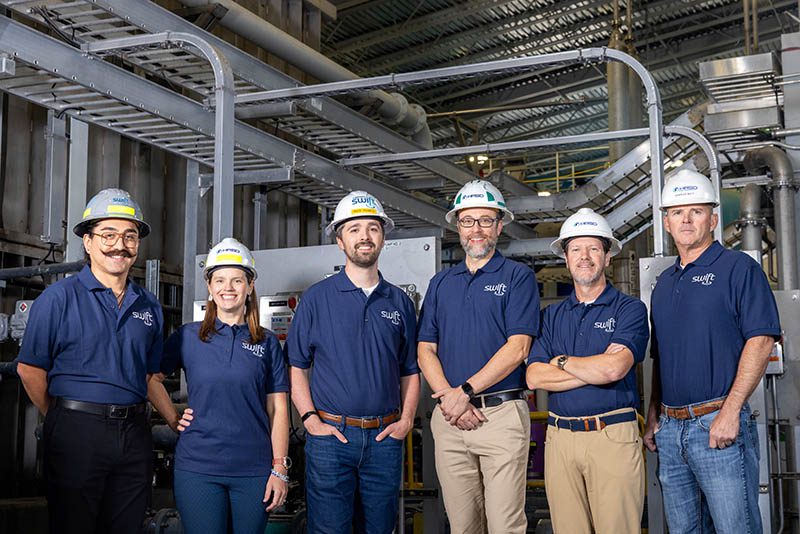
From left to right: Germano Salazar-Benites, Lauren Zuravnsky
Mack Pearce, Mike Hess, Dan Holloway, Dr. Charles Bott
So exactly why is SWIFT such a game changer? Here are the basics:
• SWIFT takes highly treated water that would otherwise be discharged into the Elizabeth, James or York rivers and puts it through additional rounds of advanced water treatment to meet drinking water quality standards.
• The SWIFT Water is then pumped into the Potomac Aquifer, which is the primary source of groundwater throughout all of eastern Virginia.
• The project serves to help sustain the region’s long-term groundwater supply.
Why be concerned with groundwater in Coastal Virginia? According to the research conducted by HRSD and its partners, groundwater is being used in eastern Virginia at rates faster than it can be naturally replaced. Adding SWIFT Water back into the ground will replenish this natural resource and protect the Potomac Aquifer from further damage caused by overuse. Overdrawing an aquifer can cause wells to go dry, lead to sinking land—known as land subsidence, allow saltwater intrusion, and harm the ecosystem.
Currently, the SWIFT research center is replenishing the Potomac Aquifer with up to one million gallons of drinking water quality SWIFT Water each day.
Looking back on the evolution of the SWIFT project, Bernas shared the following: “This all started as we were looking to optimize our compliance with different regulatory bodies, and to adhere to programs designed to reduce pollution in the Chesapeake Bay. Ours is a highly-regulated industry, and the goal posts are always moving. So we decided to go ahead and purposely purify the water. Then, the question became, ‘what do we do with it?’ So we thought, hey, the aquifer is being over withdrawn, so why don’t we just pump it back into the aquifer?”
Bernas was the project manager for SWIFT early on. He and his team wanted to do a study, so they reached out to the US Geological Survey (USGS) to share their idea. “The USGS’ response was: ‘You want to what!?’ Bernas relates. “They were initially skeptical, but now, they’re our biggest fan.”
Bernas continues. “Later, the USGS came back to us and said: ‘Well you know, if you start pumping water into the aquifer, you may be able to positively impact other things like land subsidence.’ We had never heard of that so we began to learn how pumping water back into the aquifer could help mitigate it. In addition, the experts at USGS told us that helping to recharge the aquifer could actually prevent saltwater intrusion as well, plus reducing the amount of nutrients going into the Bay. So the whole SWIFT project has been a huge evolution—one project with multiple impactful benefits. Plus, we saved the region $5 billion by collaborating with all of the localities and with regulatory drivers, so rates haven’t gone up nearly as much as they could have.”
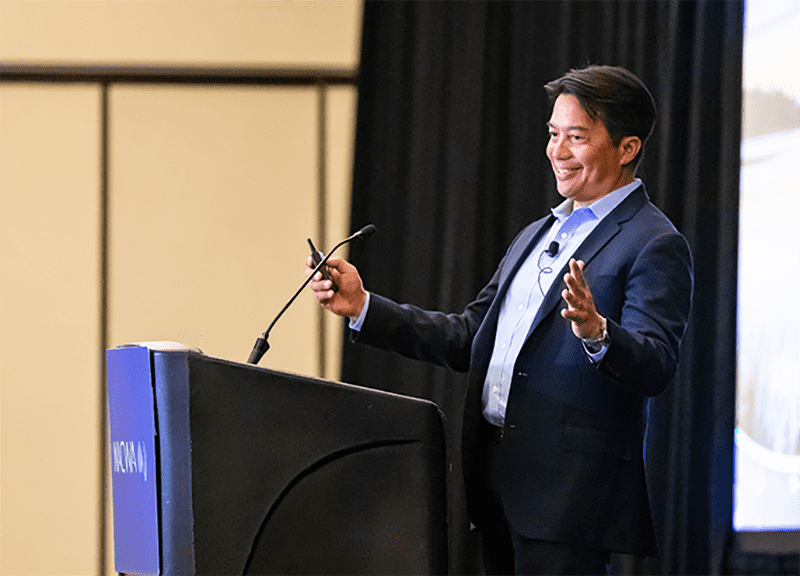
Hampton Roads Sanitation District
General Manager and CEO Jay Bernas
Bernas says he’s blessed and honored to be working with such a great team. “People are our most important asset.” he shares. “We attract the best and we retain the best. Turnover is very low.”
The HRSD/SWIFT project isn’t the work of one person, so we reached out to hydrogeologist Dan Holloway, and to HRSD Director of Design & Construction–SWIFT, Lauren Zuravnsky to get their thoughts on the project.
Dan Holloway: “SWIFT is technically pioneering and exciting in so many groundwater related respects: hydrogeology, geochemistry, well design, regulatory challenges and more. And it requires a coordinated group of people who are committed to getting the job done correctly. I’m excited to work with such capable, sharp, and innovative people every day. SWIFT is unique and bold, providing an elegant solution to multiple challenges facing the region. Seeing something so ambitious come to fruition is an example of thinking big and seeing a path.”
Lauren Zuravnsky: “Beyond the environmental benefits, the implementation of SWIFT also has significant economic value for the region. The construction and operation of these facilities engages local firms, creates new employment opportunities, and builds regional workforce skills. What excites me most about delivering the SWIFT infrastructure program is knowing that these projects will directly result improve the water environment in Hampton Roads and support our community for generations by providing a sustainable source of groundwater.”
Back to Innovative Superheros article >>