
by Tom Fulton, Senior VP Operations, Skanska USA Civil Southeast
Photos courtesy of Skanska
Skanska USA Civil Southeast’s roots in coastal Virginia go back to the founding of Tidewater Construction Corporation in Norfolk in 1932.

In the early 1930’s the owner/operator of the Gloucester-Yorktown ferry, William T. Ashe, purchased equipment that belonged to the bankrupt Atlantic Bridge Company, intending to use it to maintain the ferry slips. Mr. Ashe agreed to a proposal from five ex-employees of Atlantic Bridge to operate the equipment to maintain the ferry slips and work on other private projects.
Thus began the company that became known as Tidewater Construction Corporation, a marine and pile driving construction firm. From that small beginning, the company grew to a position of prominence among the southeast’s major engineering and general construction firms operating primarily in the marine and heavy construction industry. Iconic projects over the years in coastal Virginia include the original Chesapeake Bay Bridge Tunnel, downtown Norfolk Tunnels and Berkely Bridges, the Hampton Roads Bridge Tunnels, and many more local highway and bridge projects.
In 1998, Tidewater became a US subsidiary of Skanska, strengthening its presence in the heavy civil and marine construction markets in the southeastern US, but particularly in Hampton Roads where it was headquartered.
Hampton Roads is home to the world’s largest Naval Base (and numerous other military installations), the largest shipbuilding facility in the US, the second largest East Coast port by tonnage, and a thriving tourism industry with numerous cultural and historical resources. It contributes 20% to Virginia’s total GDP, second only to Northern Virginia. This economic output is entirely dependent on the transportation infrastructure necessary to access the area. The area’s transportation network and array of waterways make it a logical home market for Skanska’s marine and highway construction expertise.
Skanska’s equipment yard on the Southern Branch of the Elizabeth River in Chesapeake serves as the home port for our marine construction fleet. Marine access to projects along the entire East Coast via the Atlantic Intracoastal Waterway is just as vital to our operations as the region’s roadway network.
Skanska has established longstanding relationships with local clients, subcontractors, and suppliers throughout the area. Over the years, we have successfully delivered numerous projects for the U.S. Navy, U.S. Army Corps of Engineers, U.S. Coast Guard, Virginia Department of Transportation, and many for local municipalities. We actively participate in several local and regional economic development organizations, including the Virginia Maritime Association, Virginia Transportation Construction Alliance, Society of American Military Engineers (Hampton Roads Chapter), and the Virginia Chamber of Commerce.
In addition, Skanska works closely with local high schools and universities, providing sponsorships and outreach programs to raise awareness of—and promote careers in—the heavy civil and marine construction industry.
I moved to the area as a young engineer on a two-year secondment from the United Kingdom in 1990. I was quickly impressed by the caliber of people in the company, their care for each other and their work. They treated their work and the company as if they were their own. Even to this day, many of our employees have spent their entire careers with the company. As I look back over the last 40 years, I can’t think of a better career choice or a place to live. It’s fulfilling to be a part of building complex infrastructure that improves transportation efficiency and commerce across the area. The technical challenges of large marine projects can be daunting at times, but solving construction engineering problems is part of the reward.
Working for Skanska has given me the opportunity to be a part of several “once in a lifetime” projects.
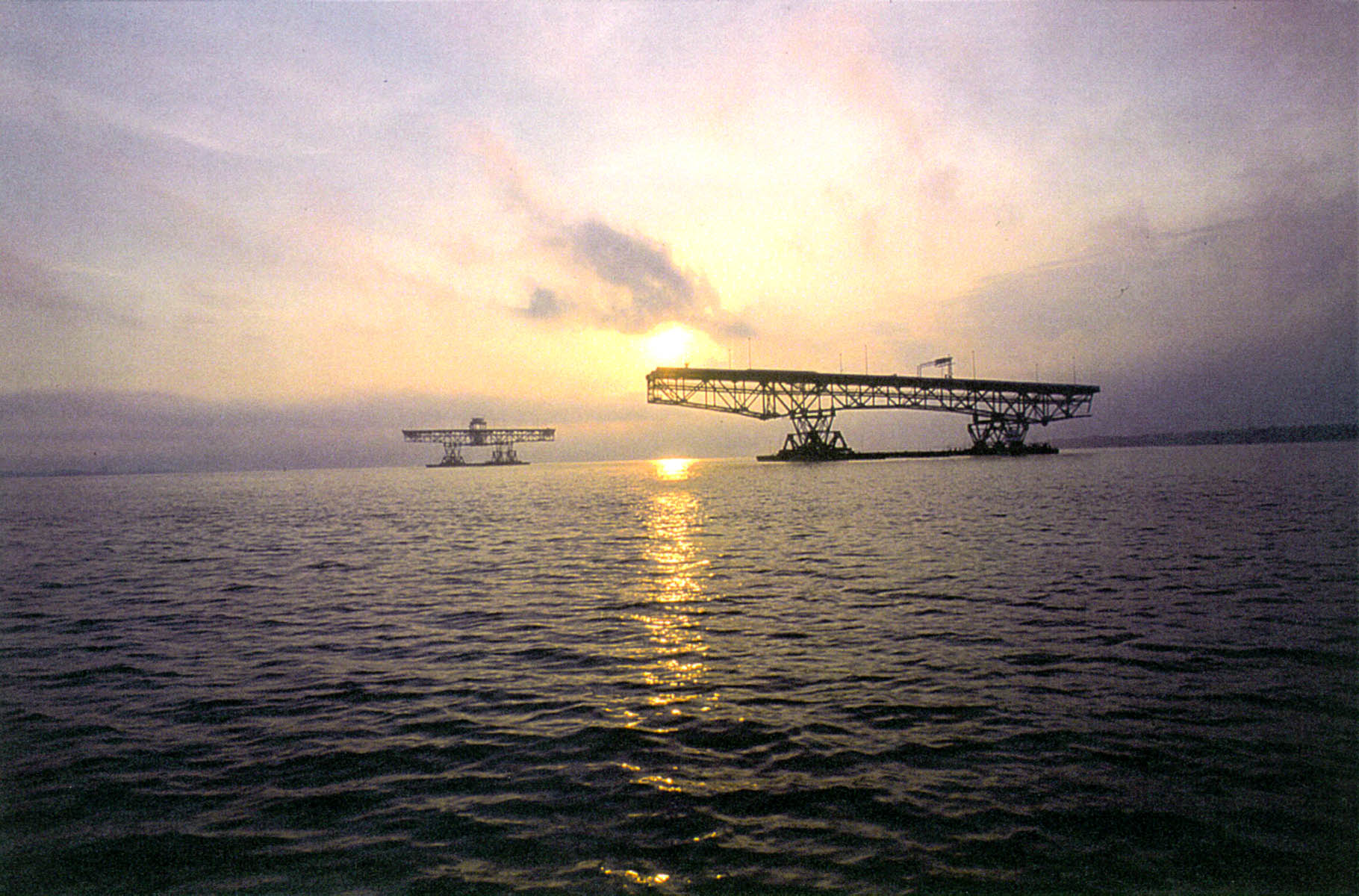
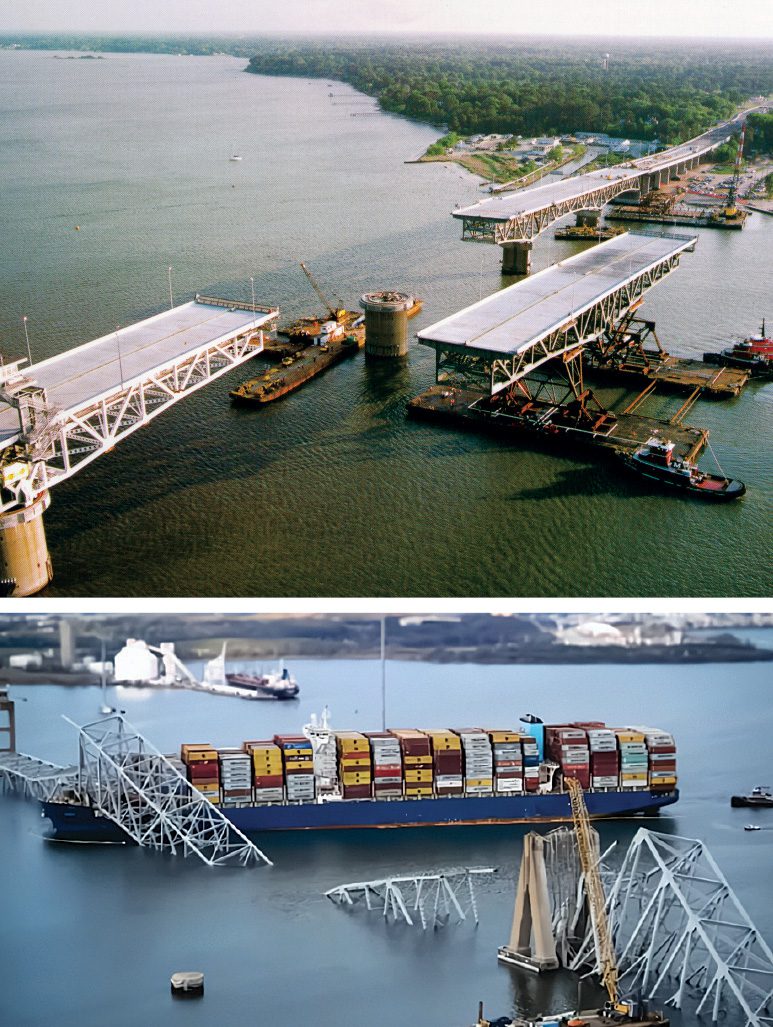
In May 1996, the George P. Coleman Bridge, the world’s largest double swing span bridge crossing the York River was replaced in just nine days during a, round the clock, “float in/float out” operation. The new half mile long, 110’ high, four lane bridge, supported by six large steel truss sections weighing over 23,000 tons, were built 35 miles offsite in Norfolk, complete with pavement, barriers and light poles then barged up the Chesapeake Bay to replace the existing two-lane structure. This was the largest project undertaken by VDOT up to that time.
In 2016, the new Midtown Tunnel, the most recently constructed immersed tube tunnel in the Hampton Roads area, was completed a year ahead of schedule and on budget for VDOT. Eleven precast concrete tunnel sections were cast at Sparrows Point drydock in Baltimore, then floated down the Chesapeake Bay and submerged one at a time across the Elizabeth River. At $1.5 billion, it was the largest project undertaken by VDOT up to that time.
When six spans of the Francis Scott Key Bridge collapsed on March 26, 2024 after being struck by the containership Dali, we mobilized a Skanska team to the site immediately and worked with the US Army Corps of Engineers, US Coastguard, US Navy and MDTA under a national spotlight to clear over 2300’ of collapsed bridge and reestablish access to the Port of Baltimore. In an intense 11-week operation, over 17,000 tons of mangled steel and 30,000 tons of concrete were cleared from the Patapsco River. Fleet Admiral William Halsey Jr.’s quote best summarizes that experience for me: “There are no great men, only great challenges that ordinary men are forced by circumstances to meet.”
Ongoing and recently completed projects in Coastal Virginia include the Nice Middleton Bridge, Coastal Virginia Offshore Wind Staging facility at Portsmouth Marine Terminal, Norfolk International Terminals North Wharf Improvements and US Naval Shipyard Berths 40 & 41 Replacement.
I feel incredibly fortunate to have built a career in this area, working for a company whose values align with my own, living in a great place, while contributing to world-class infrastructure that improves daily life for the people who call this region home.